Research subpage
Optogenetics
Genetically encoded sensors and optically controlled proteins for measuring and perturbing biochemical networks in living cells.
Single Cell Biochemistry
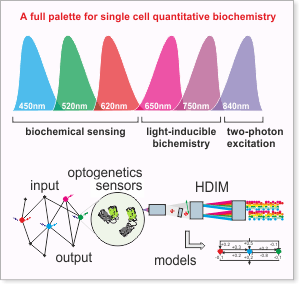
State of the art technologies do not permit to characterise a number of biochemical reactions in the living cells thereby limiting our capabilities to establish causal dependencies between the spatiotemporal dynamics of biochemical networks and cellular decisions. Therefore, we devoted significant efforts to develop novel fluorescence-based assays with the aim to enable complex biochemical measurements in single living cells.
Thanks to its low invasiveness, fluorescence microscopy enables the characterization of molecular interactions and other biochemical events (e.g., post-translational modifications) with high spatiotemporal resolution in the living cell. For instance, Foerster Resonance Energy Transfer (FRET) can unveil protein-protein interactions or conformational changes in fluorescently tagged proteins by encoding in the properties of fluorescence (lifetime, polarization, colour) biochemical signatures. Thus, we have developed a novel family of FRET pairs that can be used to monitor at least three biochemical reactions simultaneously.
More information available on bioRxiv here: Maximilian W Fries, Kalina T Haas, Suzan Ber, John Saganty, Emma K Richardson, Ashok R Venkitaraman†, and Alessandro Esposito†,*, “Multiplexed biochemical imaging reveals caspase activation patterns underlying single cell fate“, online at bioaRxiv [BIORXIV/2018/427237] while under review
Furthermore, we developed optically responsive protein domains that alter their conformation or elicit interactions upon absorption of light. These novel optogenetics tools permit us to activate and de-activate with high spatiotemporal resolution the biochemical activity of a specific enzyme or oncogene.
Related microsite
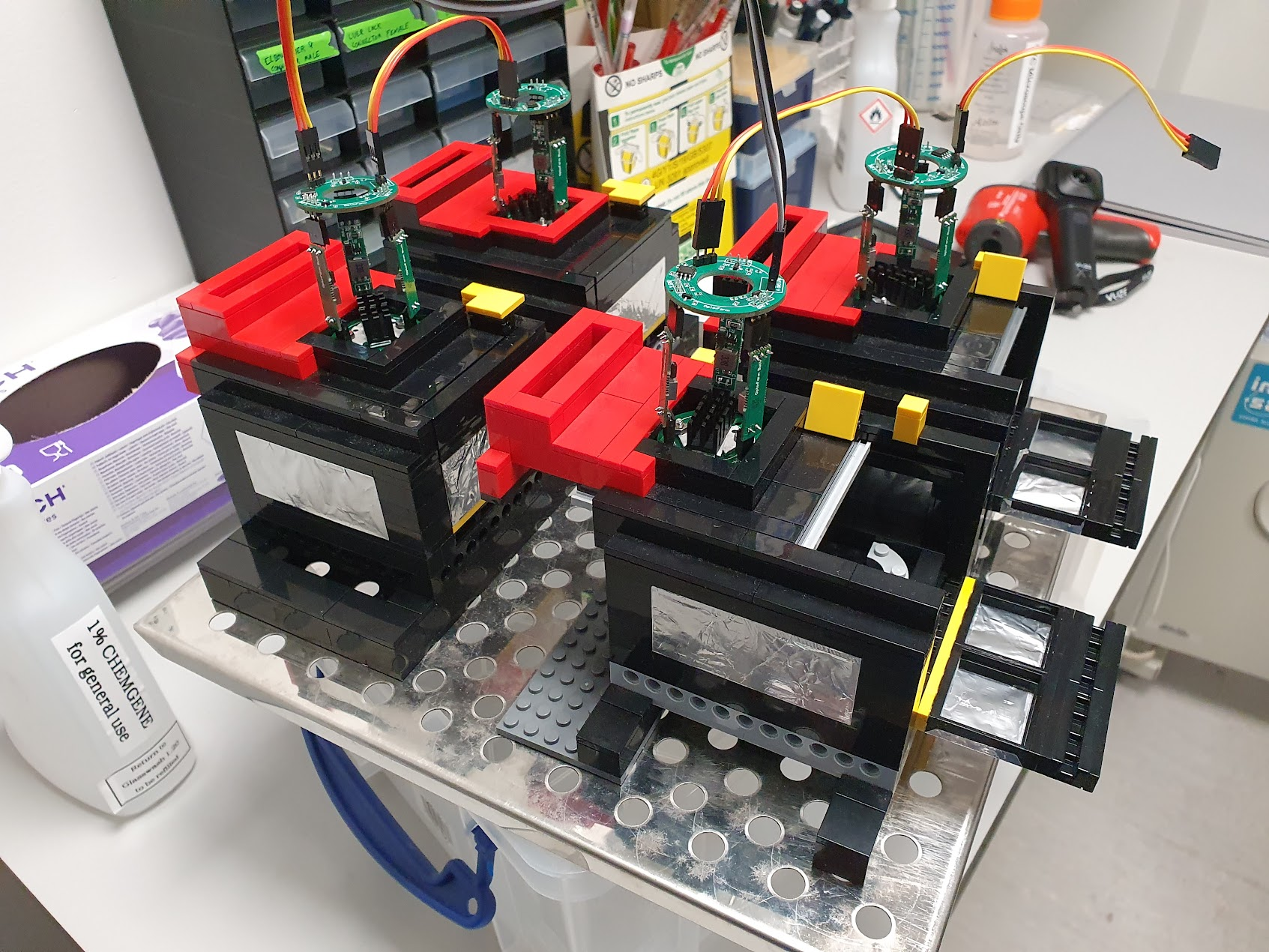
opto:farm
Open-source optogenetics hardware notes, opto:pod diagnostics, and light-sensing pages imported from the original opto:farm site.
Explore opto:farm