Research subpage
Oncogenic signalling
How KRAS and related signalling networks reprogramme cell behaviour, tumour suppressive responses, metabolism, and early oncogenic phenotypes.
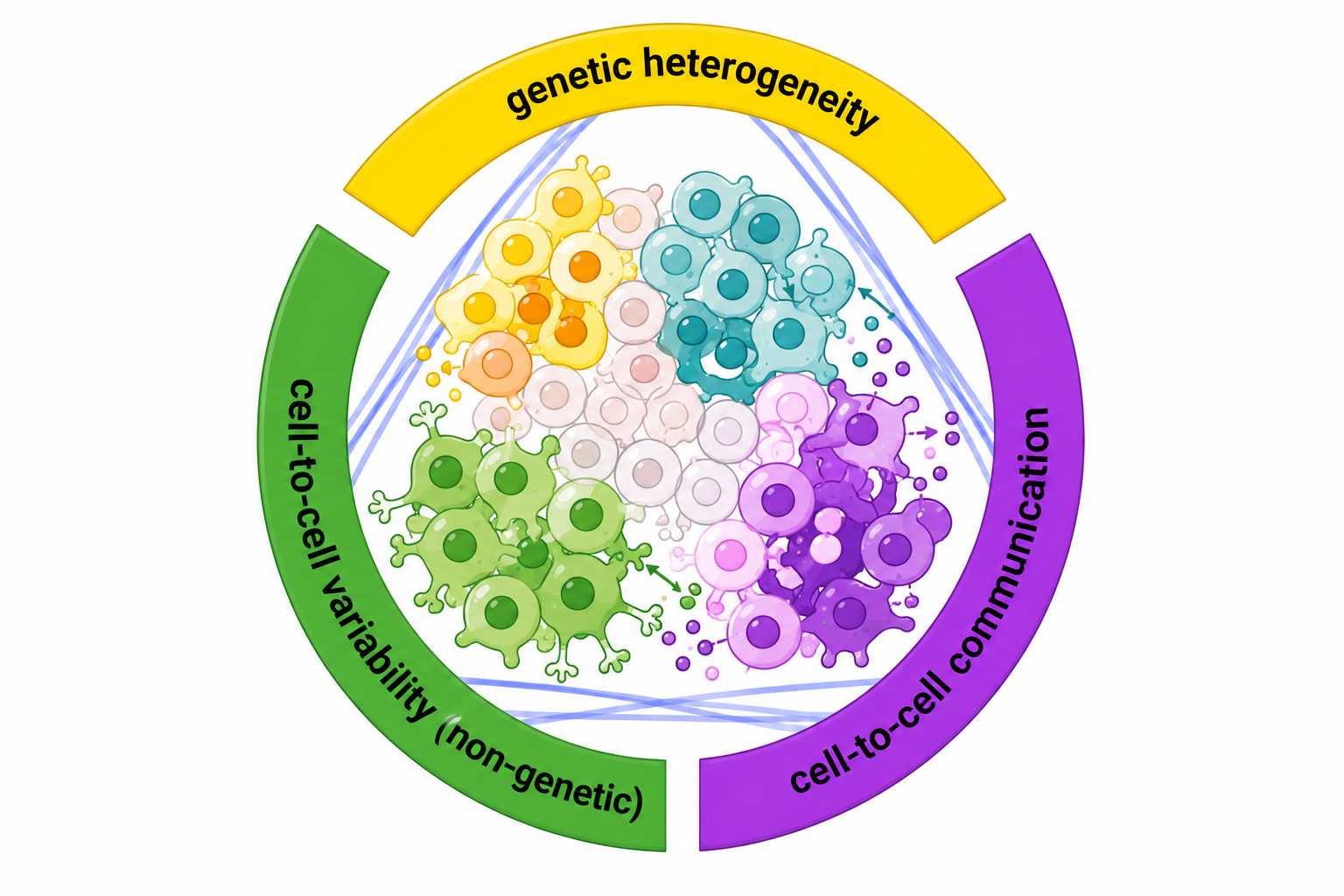
KRAS signalling and early oncogenesis
Lung, bowel, and pancreatic cancers are among the leading causes of non-gender specific cancer mortality, and are frequently driven by KRAS mutations. Despite decades of work on RAS biology, these tumours remain difficult to treat because RAS effector networks are complex, context dependent, and shaped by both genetic and non-genetic heterogeneity.
Our approach focuses on understanding these signalling networks in living cells, where biochemical state, cell fate, and adaptive responses can be followed directly rather than averaged across populations.
Genetic heterogeneity: KRAS and FOXO1
Our work on KRAS and FOXO1 investigates how oncogenic KRAS signalling rewires transcriptional control and cell-state decisions. The study links KRAS-driven network changes to FOXO1-dependent programmes that can shape cancer-associated phenotypes and reveal vulnerabilities that are difficult to see from endpoint population assays.
Selected paper:Ber, Patel, Valls, Howitt, Trinh, Esposito and colleagues. "KRAS and FOXO1 cooperate in oncogenic signalling and cell-state control." EMBO reports (2025). doi:10.1038/s44319-025-00641-z
Non-genetic heterogeneity
After earlier work on cell-to-cell variability at the DNA damage checkpoint, we are studying non-genetic heterogeneity in signalling and metabolic pathways in the context of KRAS oncogenic signalling. A KRAS mutation can trigger tumour suppressive mechanisms, but can also create states with fitness advantages that contribute to tumour initiation or drug resistance.
Live single-cell systems biology lets us connect signalling, metabolism, phenotype, and fate over time, so we can ask how genetic variability in KRAS-driven cancers synergises with non-genetic variability.
Paracrine oncogenesis
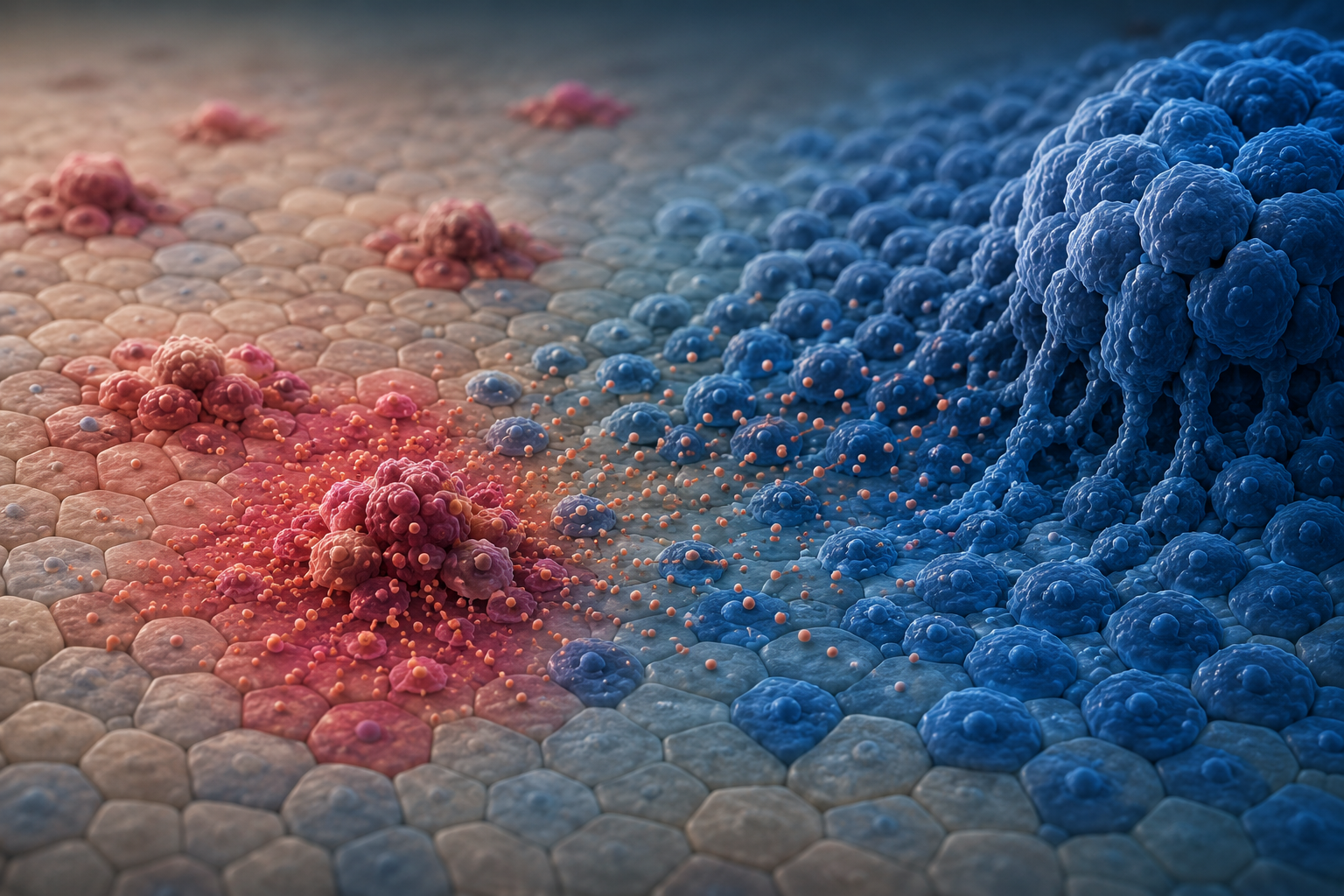
Tumour initiation is a sequential process that unfolds in a three-dimensional tissue environment. Cooperation, competition, and communication between cellular populations can therefore influence the earliest steps of tumour initiation and promotion.
We developed theoretical work showing how DNA mutation and cell-to-cell communication can contribute to early carcinogenesis. This work is now published as: Esposito and Greulich. "Cooperation of partially transformed clones: an invisible force behind the early stages of carcinogenesis." Royal Society Open Science 8, 201532 (2021). doi:10.1098/rsos.201532
Experimentally, the OncoLive programme develops biophysical and genetic techniques to seed mutations with controlled spatial and temporal precision, then quantify biochemical networks and clonal dynamics in three-dimensional cultures.

Related microsite
OncoLive
Project notes on biophysical modelling of early oncogenesis, optogenetic control of cancer-causing events, and live imaging in three-dimensional epithelial cultures.
Explore OncoLive