Mini Library
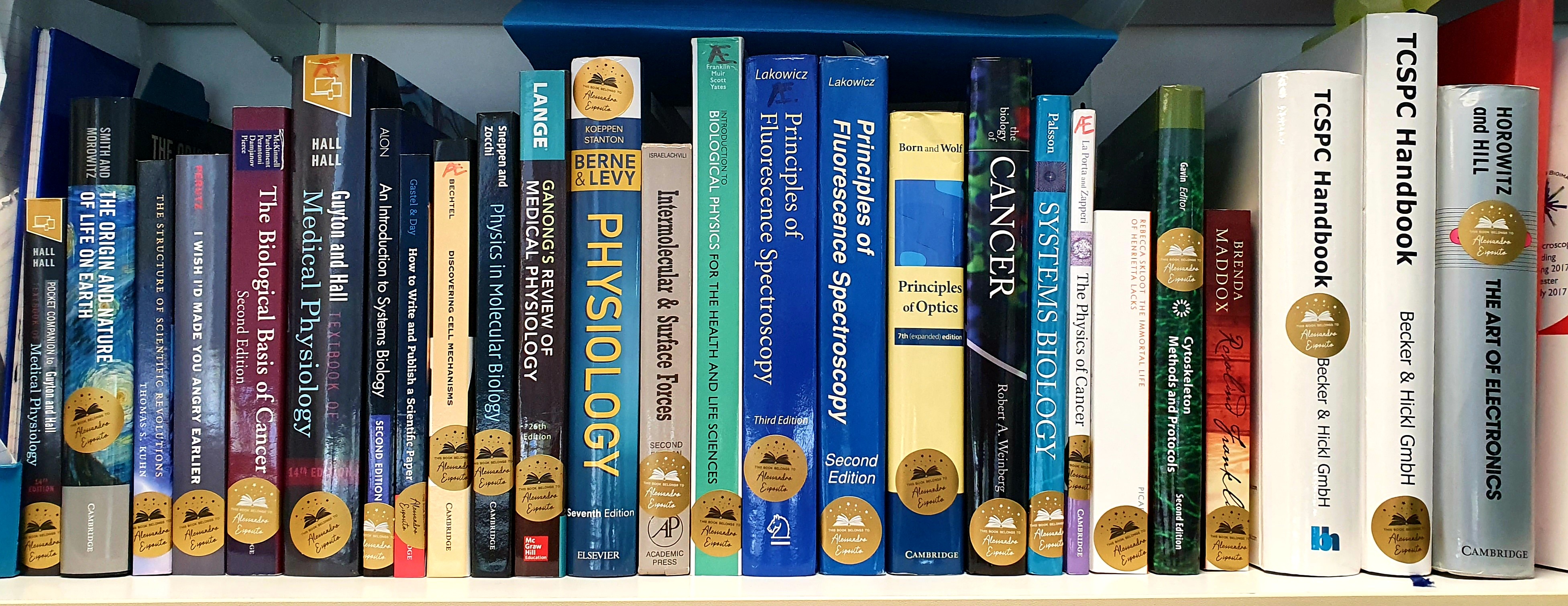
This is a small collection of books we keep in the lab to share. Each title has been kept because it adds something useful to how we think about biology, imaging, cancer, ethics, or scientific practice.
Borrowing
Shared lab shelf
All lab members and close colleagues can borrow these books. The shelf is meant to stay practical: if a title helps with a project, a discussion, or a teaching activity, take it on loan and return it when the next person needs it.
The selection below is deliberately mixed: some books are technical, some historical, and some are here because they sharpen scientific judgement.
Selection
Why these books are on the shelf

The Structure of Scientific Revolutions
This is here because quantitative biology does not advance only through better measurements. It also advances when we recognise when a framework has become too narrow and needs to be replaced.

Mechanisms in Biology
A useful reminder that explanation matters as much as description. The lab works across imaging, modelling, and perturbation, so mechanistic thinking has to stay explicit.

Rosalind Franklin: The Dark Lady of DNA
Selected because scientific progress is inseparable from the people, institutions, and credit structures around it. It keeps the human side of discovery visible.

Principles of Fluorescence Spectroscopy
This is one of the technical foundations behind much of the lab's imaging work. It belongs on the shelf because good microscopy depends on understanding the physics as well as the biology.

I Wish I'd Made You Angry Earlier
Included for its view of scientific life, judgement, and mentorship. It is a strong counterweight to overly polished narratives about how research actually gets done.

The Emperor of All Maladies
Cancer biology in the lab benefits from historical depth. This book keeps the disease in view as a long scientific and clinical story rather than only a molecular problem.

The Immortal Life of Henrietta Lacks
A necessary book for thinking clearly about ethics, consent, tissue use, and the people behind biomedical materials that become routine in laboratories.

Molecular Biology of the Cell
This remains a shared reference point across projects. It is here because a quantitative lab still needs a strong common biological vocabulary.